Welcome to the Mathematical World!
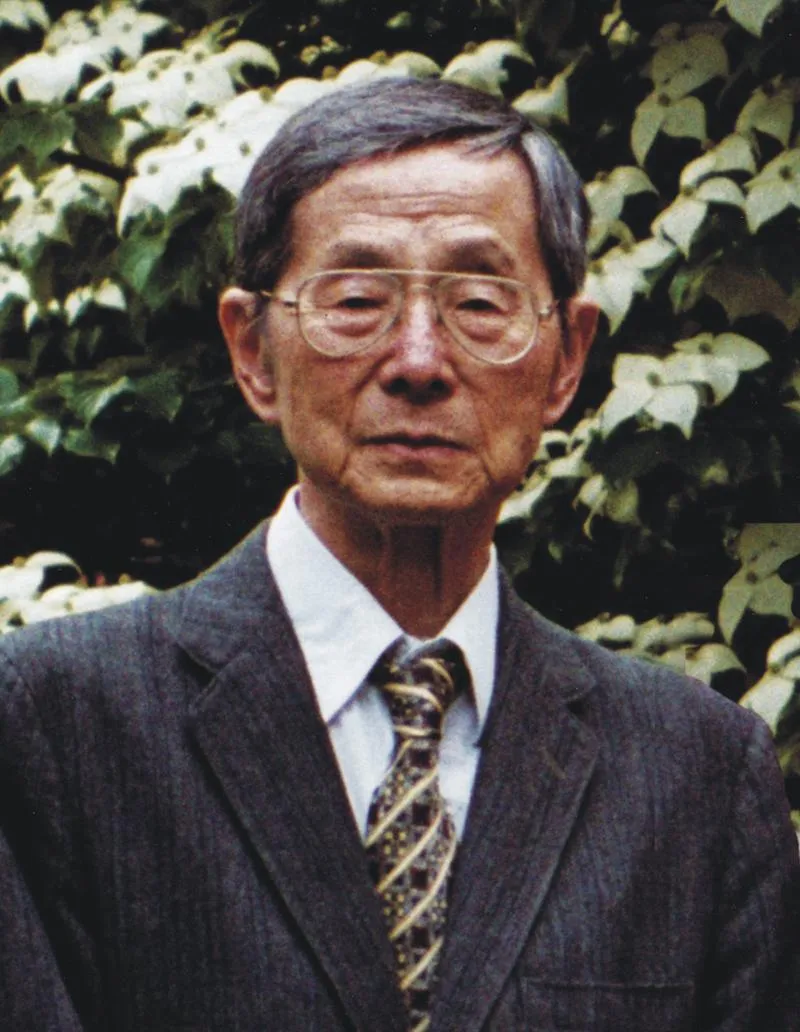
Rimhak Ree
Korean Group Theorist and Innovator
Rimhak Ree (1922–2005) was a pioneering Korean mathematician whose work profoundly impacted group theory. He discovered a new family of finite simple groups, now known as the Ree groups, during the 1960s, expanding the classification of simple groups :contentReference{index=3}.
His work demonstrated the existence of two infinite families of simple groups constructed via Chevalley methods, verifying properties predicted by abstract group theory. These Ree groups remain central to modern algebraic research and have been a catalyst for further exploration into the structure of simple groups :contentReference{index=4}.
Ree's legacy includes not only groundbreaking theoretical results but also his status as a global mathematical leader—recognized by peers internationally. His name is permanently inscribed in the history of group theory.
Legacy
Rimhak Ree expanded the frontiers of algebra, providing mathematicians with powerful new tools and structures. His discovery remains a pillar of finite group theory and continues to influence mathematical research worldwide.

All rights reserved by the Mathematical Unity
Contact: +8801400044645
Email: mathematicalhorse1453@gmail.com
Our Discord Server: Mathematical Unity [Ulus Riyadiyat]